
Quick Answer
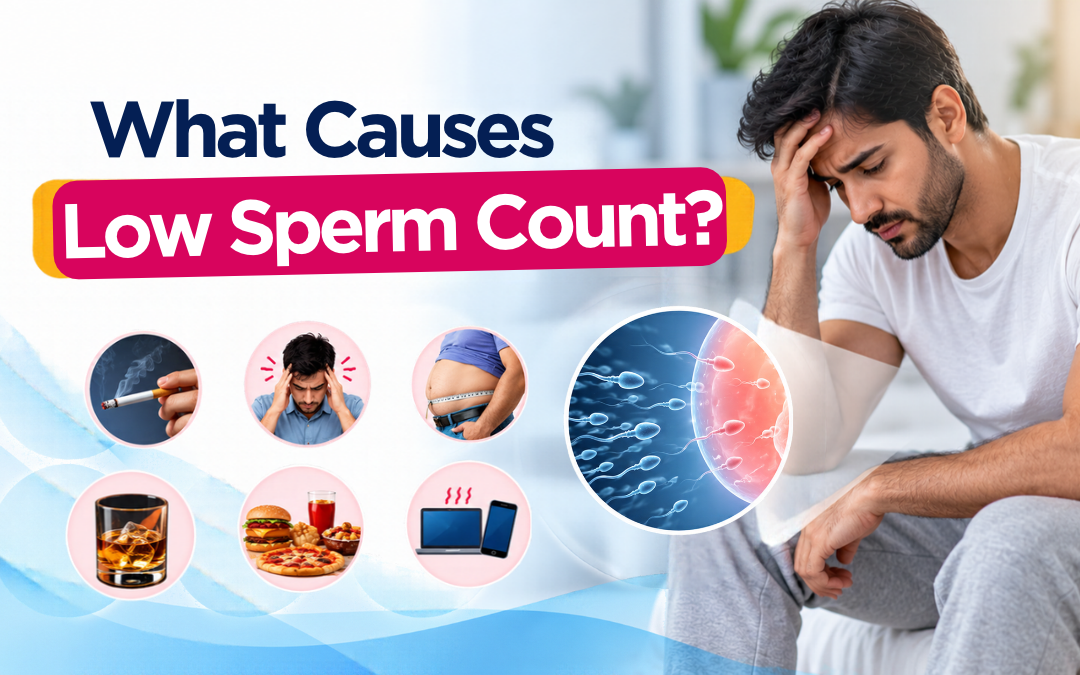
Low sperm count can be linked to varicocele, hormonal problems, infections, certain medicines, genetic conditions, heat exposure, smoking, alcohol, obesity, or other health factors. A semen analysis is usually an important first step in evaluating male fertility.
Common Causes of Low Sperm Count
Varicocele
A varicocele is an enlargement of veins around the testicle. In some men, it can affect sperm production.
Hormonal Problems
Hormones play an important role in sperm production. Problems involving testosterone or other reproductive hormones can affect sperm production.
Infections
Certain infections can affect the reproductive system and may interfere with sperm production or movement.
Lifestyle Factors
Smoking, excessive alcohol consumption, obesity, poor sleep, and lack of physical activity may negatively affect reproductive health.
Heat Exposure
Repeated exposure to high temperatures around the testicles may affect sperm production in some men.
Medicines and Medical Treatments
Certain medicines and treatments such as chemotherapy can affect sperm production. Never stop prescribed medication without medical advice.
Genetic Conditions
Some genetic conditions can affect sperm production and male fertility.
How Is Low Sperm Count Diagnosed?
A semen analysis checks sperm concentration and other semen characteristics, including movement and shape.
If the result is abnormal, your doctor may recommend repeating the test or conducting additional investigations.
Can Low Sperm Count Be Treated?
Treatment depends on the underlying cause. Lifestyle changes, treatment of medical or hormonal problems, management of varicocele in selected cases, or fertility treatments may be considered.
FAQs
Does low sperm count mean infertility?
No. Pregnancy may still be possible depending on the overall fertility situation.
Can stress affect sperm count?
Long-term stress may affect reproductive health, although it is usually not the only cause.
How is sperm count tested?
It is evaluated through a semen analysis.
Can low sperm count improve?
In some cases, treating the underlying cause and improving lifestyle factors may help.
Conclusion
Low sperm count does not automatically mean permanent infertility. Proper evaluation can help identify possible causes and guide appropriate treatment.