
Quick Answer
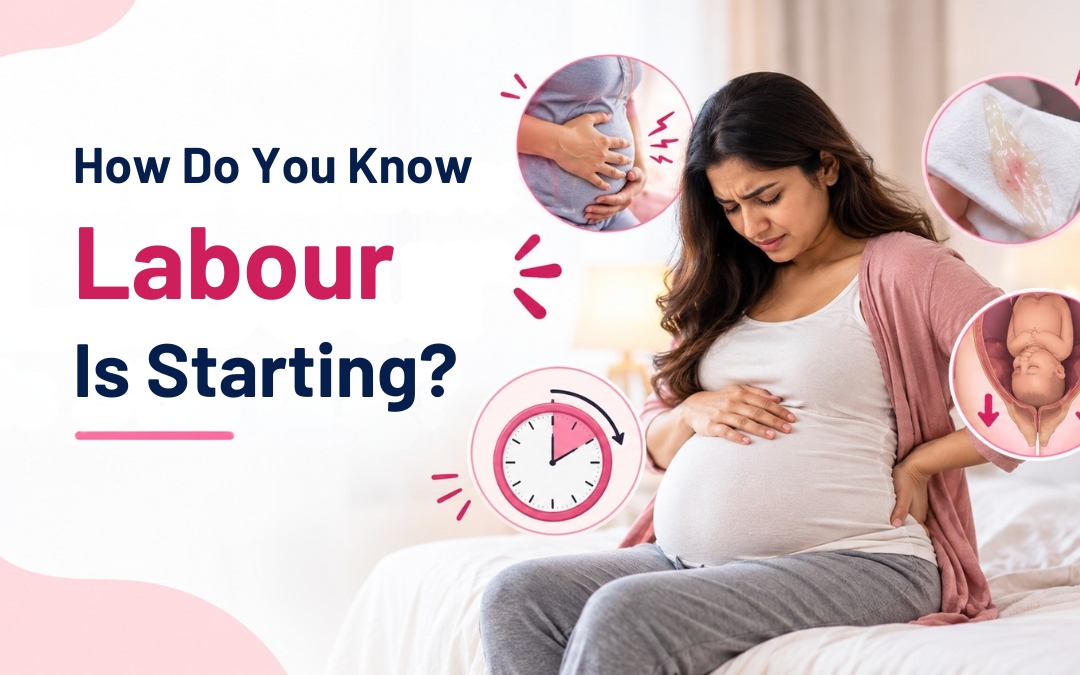
Common signs that labour may be starting include regular contractions that become stronger and closer together, lower back pain, pelvic pressure, a mucus plug or “show,” and breaking of the waters. Every pregnancy is different, so contact your maternity team when you notice signs of labour or have concerns.
Signs Labour May Be Starting
Regular Contractions
True labour contractions usually become:
- More regular
- Stronger
- Longer
- Closer together
Unlike occasional practice contractions, they generally continue despite changing position or resting.
Back Pain and Pelvic Pressure
Some women experience lower back pain or increasing pressure in the pelvis as labour approaches.
Mucus Plug or “Show”
You may notice thick mucus, sometimes with a small amount of blood. This can happen as the cervix begins to change.
Water Breaking
The amniotic sac may rupture before or during labour. You may experience a sudden gush or a continuous leakage of fluid.
If your waters break, contact your maternity care team for advice.
When Should You Go to the Hospital?
Contact your maternity team if:
- Your contractions become regular and stronger
- Your waters break
- You have heavy vaginal bleeding
- Your baby's movements decrease
- You have severe or unusual pain
- You have been advised to come in because of a high-risk pregnancy
FAQs
How do I know if contractions are real labour?
True labour contractions generally become stronger, longer, and more regular.
Can labour start without contractions?
Yes. Your waters may break before regular contractions begin.
What is a mucus plug?
It is mucus that seals the cervix during pregnancy and may be released as the cervix begins preparing for labour.
Should I wait until contractions are very painful?
Follow the instructions given by your maternity team, particularly if you have a high-risk pregnancy.
Conclusion
Knowing the common signs of labour can help you prepare for delivery. If you are unsure whether labour has started, contact your maternity care team for guidance.